
Textile and footwear recycling relies on the ability to transform complex, heterogeneous products into valuable resources. Multi-material assemblies, fiber blends, irreversible bonding, and the variability of waste streams require advanced and robust technological solutions.
CETIA develops, tests, and commercializes processes and equipment designed for identification, sorting, dismantling, and material preparation. Our work is supported by technology monitoring, pilot lines, industrial equipment, and proprietary technological modules that combine sensors, artificial intelligence, and robotics.
Our approach has a clear goal: to ensure that waste streams meet the technical and economic requirements of the recycling industry.
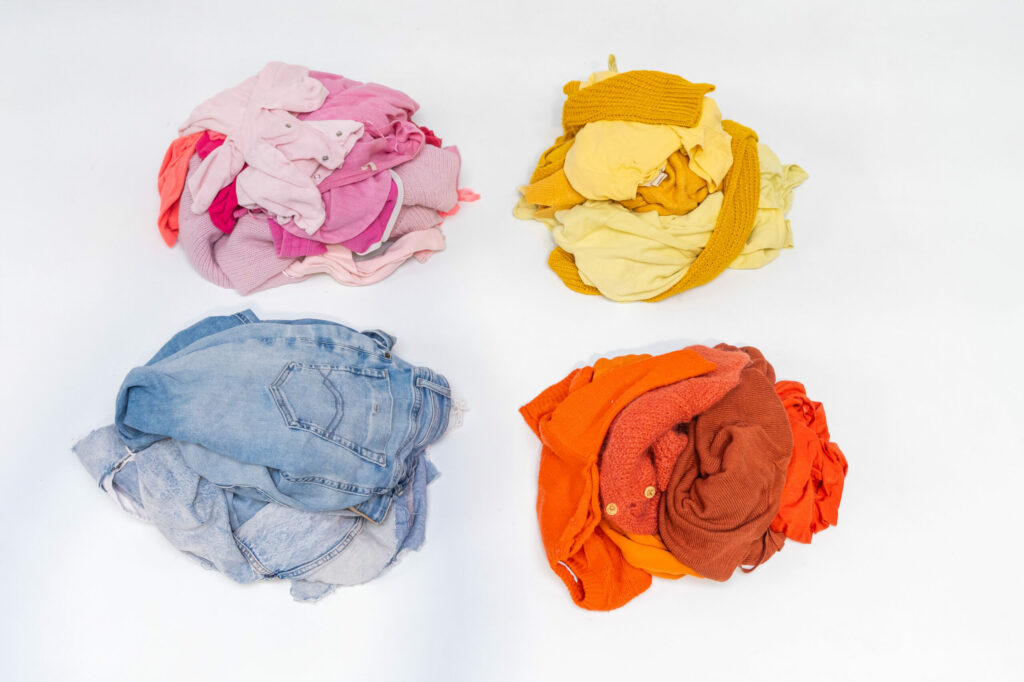
DETECTION AND SORTING
Transforming mixed textile waste streams into usable materials for recyclers requires detection and sorting systems capable of adapting to variations in products, materials, and conditions of use, wich need to be validated under practical conditions.
To address these challenges, CETIA develops solutions based on the following areas of expertise:
AUTOMATION AND ARTIFICIAL INTELLIGENCE
Development of automated systems for product detection, characterization, and sorting based on computer vision, sensor data analysis, and machine learning algorithms.
SENSOR INTEGRATION AND MODULAR SOLUTIONS
Design of automated solutions that combine various sensors to tailor detection and sorting systems to specific customer needs and the constraints of existing production lines.
TEXTILE DE-TRIMING
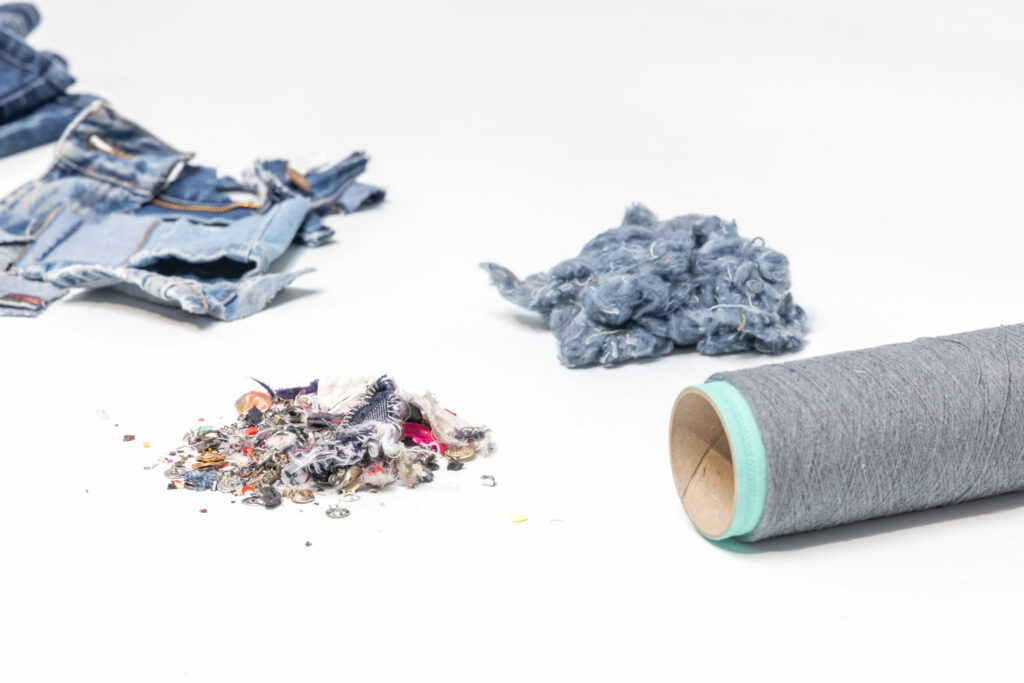
Textile de-triming is a key step in improving material recovery and the quality of recycled fibers. The variability of textiles, yarn structures, and fiber blends requires precise process control and careful adjustment of equipment.
To address these challenges, CETIA has organized its expertise around two main areas:
MASTERY OF PROCESSES AND MACHINE PARAMETERS
Fine-tuning and optimization of settings on industrial de-triming equipment to adapt processing to different types of textiles and fiber separation objectives, based on trials conducted on real material streams.
AUTOMATISATION ET INTELLIGENCE ARTIFICIELLE
Development of automated de-triming solutions to process specific products and ensure optimized material recovery.
SHOE DISMANTLING
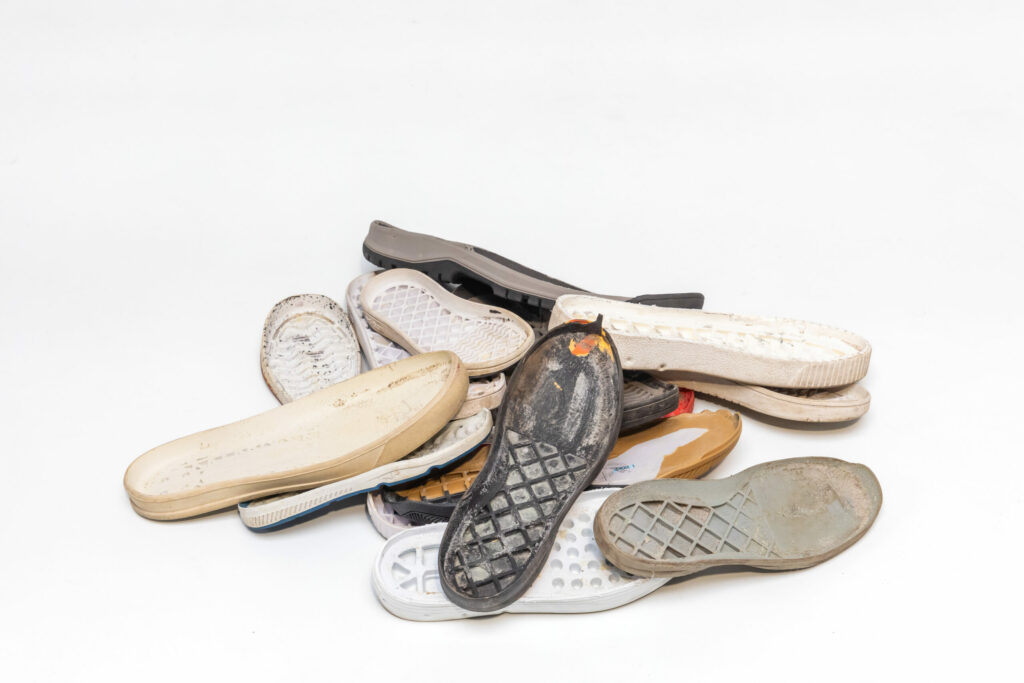
Footwear poses a major challenge for the circular economy. Its construction involves a wide variety of materials: rubber, foam, textiles, leather, and metal, which are typically joined together through sewing, gluing, or thermal processes, making them particularly difficult to separate and recycle.
To overcome these technological barriers, CETIA has built its expertise around two main areas:
ARTIFICIAL INTELLIGENCE
Implementation of machine learning algorithms to automatically identify shoe models, types, and brands, in order to improve the reliability of sorting and speed up the characterization process.
ADVANCED ROBOTICS
Design of robotic cells dedicated to automating complex tasks, such as separating the upper from the sole or performing repair operations, to ensure precision and industrial repeatability.
DO YOU HAVE A PROJECT INVOLVING SORTING, DE-TRIMING, OR DISMANTLING?
CETIA assesses feasibility, conducts tests on its pilot lines, and develops solutions tailored to industrial constraints and the characteristics of your products. Let’s discuss your needs and the possibilities for experimentation or development.