
Sorting end-of-life textiles is a critical step in the industrialization of recycling. The wide variety of sources, material mixes, colors, and accessories makes it extremely difficult to direct products to the appropriate reuse or recycling streams. At CETIA, we are innovating to make sorting systems more efficient.
AUTOMATED SORTING OF TEXTILES
SensorHUB – CETIA
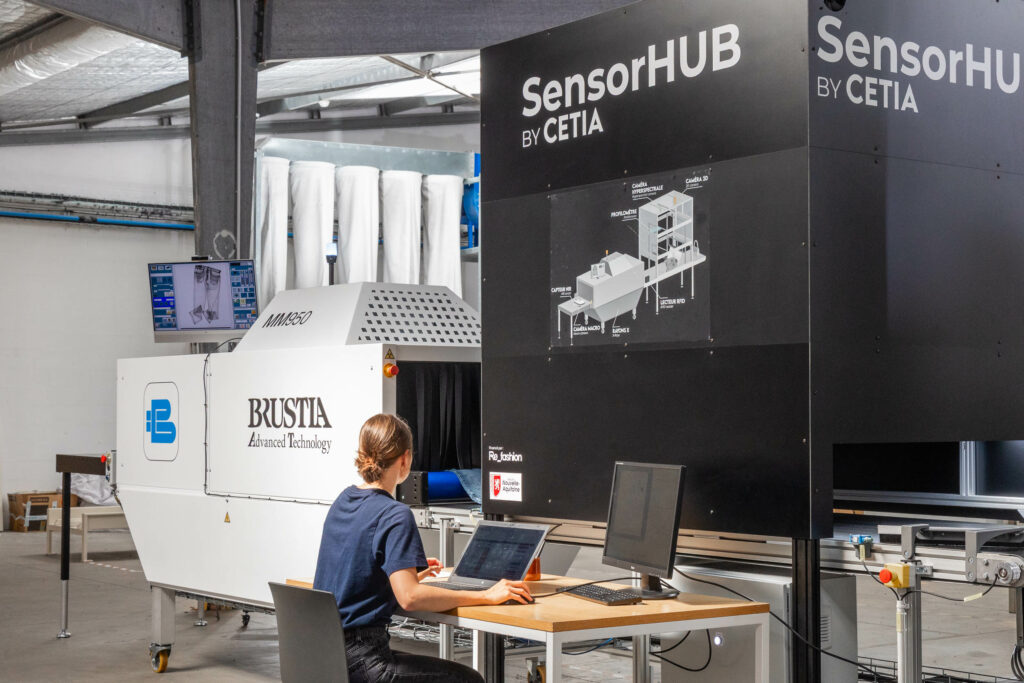
SensorHUB is an innovative solution developed by CETIA. In a single step, SensorHUB enables the precise identification of an item and optimizes its sorting by combining multiple sensors within a single cell.
SensorHUB can automatically detect a wide range of characteristics: item type, presence and location of trims, texture, color, and materials. To do this, the system integrates various sensor technologies—X-rays, 2D and 3D vision, hyperspectral cameras, and NIR sensors—coupled with artificial intelligence algorithms developed and trained by CETIA. This information makes it possible to assess the recycling potential of each item and immediately direct it to the most appropriate recovery stream.
Thanks to its mechanical systems and modular design, SensorHUB can process both textiles and more structured items such as shoes and bags. The solution adapts to various sorting operations (sorting, re-sorting, e-commerce returns) and provides intelligent assistance to operators, facilitating decision-making and enhancing the competitiveness of textile sorting centers.
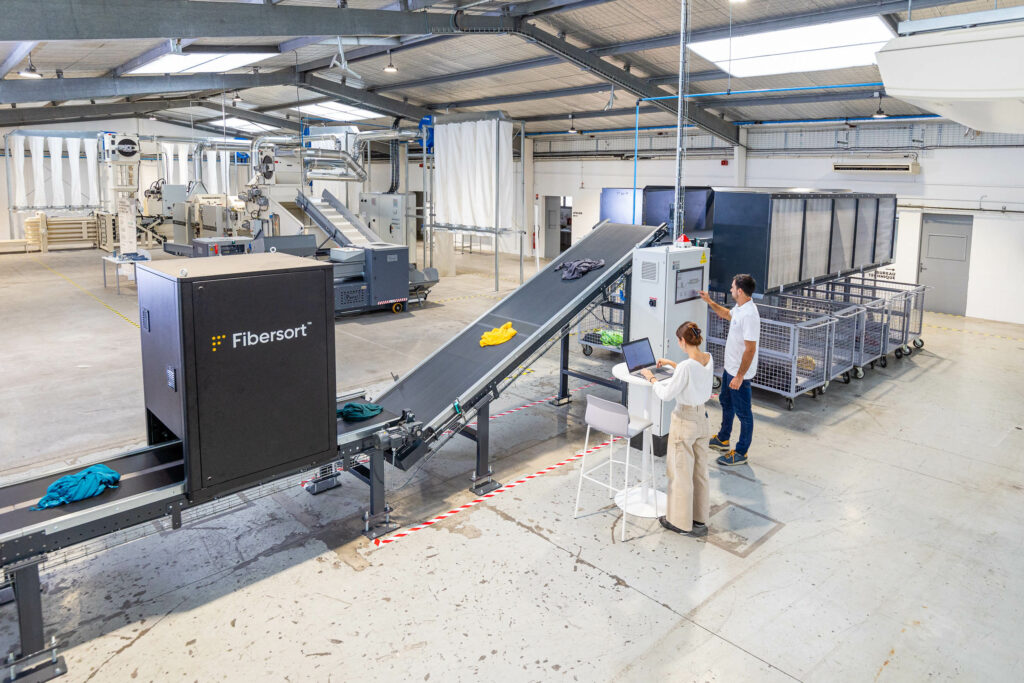
FiberSort – VALVAN
FiberSort, developed by Valvan, is an industrial solution for the automated sorting of textiles based on near-infrared (NIR) spectroscopy. It identifies the composition of textiles, including fiber blends, and separates them into homogeneous fractions that can be processed by recycling facilities. The equipment at CETIA enables testing and preparation of the material for the de-triming and recycling phases.
TEXTILE DE-TRIMING
De-triming is a key step in preparing materials for textile recycling. Clothing and textile items contain many unwanted elements—buttons, fasteners, labels, seams, and prints—that can degrade the quality of the recycled fibers if not properly removed. Ineffective de-triming limits the performance of downstream recycling processes and reduces the value of the resulting materials.
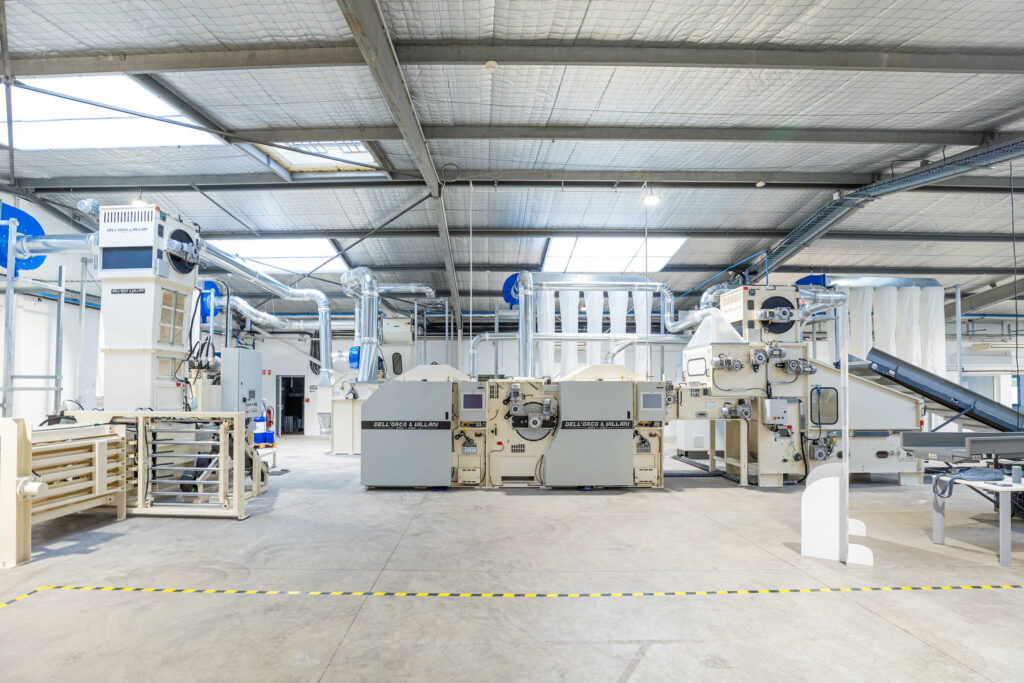
Dell’Orco y Villani
Dell’Orco y Villani’s equipment is designed to effectively remove trims from textiles, leaving only the fibers behind.
The equipment at CETIA enables us to prepare batches of fibers and, in partnership with CETI, identify the best way to utilize them. We develop various testing protocols and define the parameters best suited to each deposit.
WOULD YOU LIKE TO TEST SORTING OR DE-TRIMING ON YOUR DEPOSIT?
CETIA conducts sorting and de-triming tests on actual waste streams, including atypical or complex ones. We can process several hundred kilograms of material, characterize the resulting materials, and identify suitable recycling pathways.